
A pre-purchase inspection gives you an independent assessment of a used vehicle’s condition before you decide to buy it. A technician can check for visible wear, leaks, warning-light concerns, tire and brake condition, steering or suspension problems, and issues that appear during a road test.
The inspection cannot guarantee future reliability or uncover every hidden or intermittent problem. It documents what the technician can see, measure, scan, and reproduce during the appointment. The findings can help you identify needed repairs, upcoming maintenance, and concerns that require further diagnosis.
What a Pre-Purchase Inspection Can Reveal
The scope depends on the shop, vehicle, available access, and requested services. Ask what is included before scheduling the appointment.
Warning lights and diagnostic information
A technician can check the dashboard for illuminated warning lights and may use diagnostic equipment to gather information.
A scan can provide useful clues, but it does not provide a complete diagnosis in every case. A warning light may require additional testing to determine its cause. If an intermittent hesitation or electrical concern does not occur during the appointment, the report should state that the symptom was not present rather than declaring the vehicle problem-free.
Visible leaks and fluid condition
The technician may identify visible leaks, seepage, low fluid levels, or fluid that appears to need attention. Location and severity matter. A small seep differs from an active leak, so ask what the technician observed and whether further testing is recommended.
Some areas are difficult to inspect without removing parts. A standard inspection may not confirm the source of every fluid trace.
Tires and tread wear
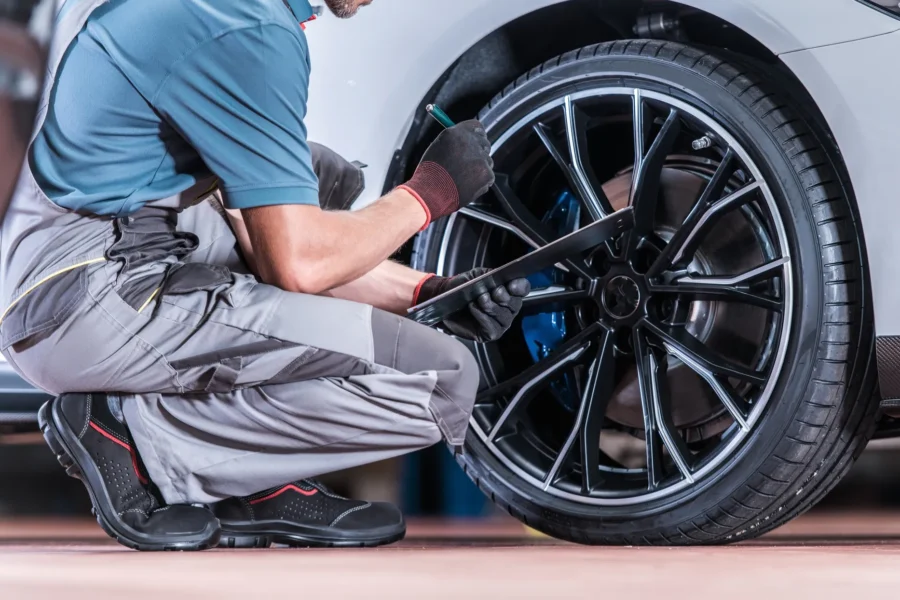
A tire inspection may cover:
- Remaining tread
- Uneven wear
- Visible cracking or damage
- Tire size and apparent matching
- Wear that may call for an alignment, steering, or suspension check
Uneven wear is useful evidence, but it does not identify the cause by itself. The technician may recommend further evaluation. If replacement is approaching, this tire buying guide explains points to consider when comparing options.
Brakes
A brake inspection can identify visible wear and concerns involving accessible components. Ask which findings need prompt attention and which may belong in a near-term maintenance plan.
Access affects what can be checked. Some brake components may require additional work before they can be evaluated fully.
Steering and suspension
Worn, loose, or damaged steering and suspension parts can affect handling, tire wear, ride quality, or noise. A technician may find these concerns during a physical inspection or road test.
Some noises occur only at certain speeds, on particular road surfaces, or under specific driving conditions. If a noise does not occur during the appointment, the report should make that clear.
Exterior and underbody condition
A visual check may uncover corrosion, damaged components, fluid residue, missing parts, or signs of previous body work.
A mechanical inspection is not a complete collision or body-repair evaluation. If an observation requires specialized knowledge, the technician may recommend evaluation by a qualified specialist.
Basic electrical functions
Depending on the inspection’s scope, the technician may check accessible electrical features and dashboard indicators. Electrical problems can be intermittent, so a feature that works during the appointment may still have an issue at another time.
Road-test behavior
If the seller allows a road test and conditions permit one, the technician may evaluate:
- Starting and idle quality
- Acceleration and transmission shifting
- Steering feel and braking behavior
- Vibration, pulling, or wandering
- Unusual noises
- Warning lights that appear while driving
A road test can reveal concerns that are not noticeable while the vehicle is parked. However, it shows how the car behaves during a limited drive, not under every possible condition.
What the Inspection Cannot Promise
A pre-purchase inspection generally cannot promise:
- That the vehicle will avoid future repairs
- That an intermittent symptom will occur during the appointment
- That every hidden or inaccessible component is in good condition
- That previous repairs were completed correctly if they cannot be fully inspected
- That available service records are complete
- That a short road test will reproduce every drivability issue
- That systems outside the agreed scope were evaluated
- An exact date or mileage when a worn part will fail
If a seller reports occasional hesitation but the vehicle drives normally during the inspection, the report should document that the technician could not reproduce the concern. That does not prove the concern is absent.
Vehicle design can restrict access. Some findings require disassembly, longer testing, manufacturer-specific procedures, or help from a specialist. Confirm the inspection scope rather than assuming every system will receive an in-depth diagnosis.
How Is a Missouri Safety Inspection Different?
A Missouri safety inspection and an independent pre-purchase inspection have different purposes.
State safety inspections generally focus on equipment affecting whether a vehicle meets applicable safety requirements. A buyer-focused mechanical inspection looks more broadly at current condition, drivability, visible wear, and possible maintenance needs.
According to the Missouri Department of Revenue’s motor-vehicle safety inspection guidance, motor vehicles must pass a safety inspection unless an exemption applies. Under the rule that took effect August 28, 2019, vehicles within the first ten years following their model year and with fewer than 150,000 miles are generally exempt. For more detail, see when a vehicle ages into Missouri’s safety inspection requirement.
An exemption does not indicate a vehicle’s condition. Likewise, a current Missouri safety inspection certificate does not replace an independent assessment. A vehicle may meet state requirements while still having worn components, maintenance needs, or drivability concerns relevant to the purchase.
What Should You Arrange Before the Appointment?
Schedule the independent inspection before committing to the purchase when possible. Ask the seller for permission to have the vehicle inspected and confirm whether the technician may take it on a road test.
Bring or request:
- The vehicle identification number, or VIN
- Available service and maintenance records
- The vehicle history report
- Details about known warning lights or recent repairs
- Notes about noises, leaks, vibrations, or drivability concerns
- Warranty or service-contract terms, if applicable
- The dealer Buyers Guide when purchasing from a dealer
Ask the shop exactly what the inspection covers. Mention specific concerns when scheduling the appointment.
If the seller will not allow an independent inspection, consider that information as part of your decision. The Federal Trade Commission recommends an independent mechanical inspection even if a dealer has inspected or certified the vehicle or it comes with a warranty or service contract.
How Should You Read the Written Report?
Request a written report tied to the correct vehicle. The FTC recommends that it include the make, model, and VIN, along with an estimate for necessary repairs.
You can organize the findings into four categories:
- Immediate concerns: Items the technician believes should be handled promptly.
- Near-term maintenance: Worn parts or scheduled services that may be approaching.
- Further diagnosis: Symptoms or evidence requiring more testing or specialist evaluation.
- Normal wear: Recorded observations that may not require immediate work.
Ask which findings affect current operation, which belong in a maintenance plan, and which remain uncertain without additional testing. Contact the shop for a current quote on recommended work.
What Other Records Should You Review?
A vehicle history report does not replace an independent inspection. It may include accident or flood information, but it typically does not list current mechanical problems.
Review the inspection together with:
- Service and maintenance records
- A vehicle history report
- A VIN-based recall check
- Your own test drive
- Warranty or service-contract details
- The dealer Buyers Guide, if applicable
- Information about incomplete safety recalls
Each source provides different information. Together, they offer a clearer basis for discussing the vehicle with the technician and seller before making a purchase decision.
Frequently Asked Questions
Does a clean vehicle history report mean I can skip the inspection?
No. History reports generally do not document current mechanical wear or every mechanical problem. A pre-purchase inspection evaluates conditions that can be observed during the appointment.
Do I need an inspection if the vehicle passed Missouri’s safety inspection?
A Missouri safety inspection has a narrower purpose. It does not replace a broader, buyer-focused assessment of the vehicle’s current condition.
Does the inspection guarantee that I will not need repairs?
No. It documents observable conditions and may identify concerns, but it cannot predict every future repair or uncover every hidden or intermittent problem.
What if the inspection identifies something uncertain?
Ask whether the concern needs further diagnosis, better access, a longer test, or evaluation by a specialist. A clear follow-up recommendation is more useful than an unsupported guess.