
If your brake fluid level is low, brake pad wear or a brake fluid leak may explain it. For Mid-Missouri drivers, the important distinction is whether fluid has shifted within the system or escaped from it. Adding fluid alone cannot establish which happened.
A technician needs to compare the reservoir reading with brake wear and inspect the hydraulics. If low fluid comes with a soft pedal, extra pedal travel, reduced braking, or a red brake warning, stop safely and arrange help rather than driving to see whether it improves.
How brake pad wear lowers the reservoir level
As pads thin, caliper pistons extend farther, leaving more fluid at the brakes and less in the reservoir. That movement does not itself mean fluid has leaked. During pad replacement, retracting those pistons pushes fluid back toward the reservoir. Goodyear Brakes explains this relationship.
This makes pad wear a possible explanation, not a diagnosis based on the reservoir alone. A reading below the minimum mark needs attention; do not assume worn pads account for it.
Why adding fluid does not answer the question
A top-up changes the reading without identifying its cause. It neither measures remaining pad material nor locates a leak.
Follow your vehicle’s manual before opening or filling the reservoir. Manufacturer instructions differ: Tesla’s brake-fluid guidance, for example, tells owners not to top it up themselves. Where filling is permitted, use the specified fluid and observe the fill limit. Keep fluid off painted surfaces.
If you have already added fluid, tell the technician what you used and when. Mention whether the level dropped again. Do not treat a restored reading as confirmation that the vehicle is safe to drive.
What a technician checks for a brake fluid leak
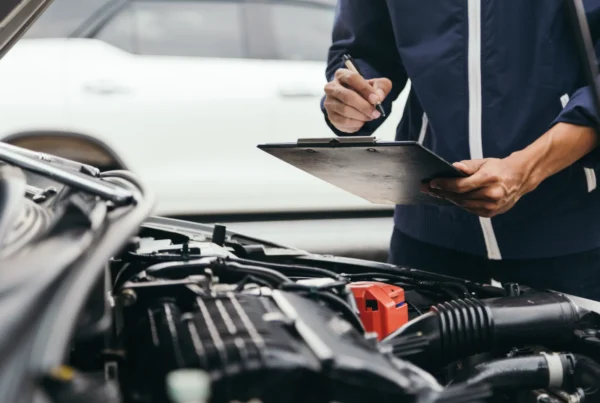
A technician checks the wear and looks for fluid loss:
- Pad wear: Measure remaining friction material rather than judging wear from the reservoir.
- Calipers: Inspect for fluid leakage, including possible seal leaks.
- Reservoir and master cylinder: Look for leakage around mounting and sealing areas.
- Brake lines and connections: Inspect the hydraulic circuit for the source of fluid loss.
- Pedal operation: Assess the reported change and verify operation after the required repairs.
For example, Mitsubishi’s service information identifies master-cylinder and reservoir mounting faces and brake-tube connections as leak inspection points. It also calls for level and pedal checks after bleeding, which removes trapped air. The exact procedure depends on the vehicle.
Clark Warehouse Tire & Auto lists brake inspections, caliper service, brake line and hydraulic repairs, and fluid checks among its brake services. The finding should determine the repair; a fluid replacement alone does not repair a leak.
What the inspection should explain
Ask the technician to show you what supports the diagnosis. If pad wear explains the reading, ask how the measured wear fits that conclusion and whether the hydraulic inspection found any leakage. If a leak is found, ask which component is leaking and what work addresses that source. A recommendation to add fluid should come with an explanation of why the level was low.
Keep the repair decision tied to those findings. You do not need to choose between pads, hydraulic repair, and fluid service before the inspection. Those are different jobs, and the reservoir reading alone does not tell you which is appropriate. Ask what needs correcting and how the technician will verify the result.
When low brake fluid means you should stop driving
Stop as soon as it is safe and arrange roadside assistance or towing if you notice:
- A soft or unusually long-travel brake pedal.
- Reduced braking response.
- A red brake warning that remains on with the parking brake released.
- Significant fluid loss or a level that keeps falling after fluid was added.
When arranging help, describe both the low fluid and any change in braking. Say plainly if the pedal feels different or a brake warning remains illuminated. Ask about transporting the vehicle rather than assuming an appointment means you should drive it there. If the vehicle is already parked, leave it parked while you arrange assistance.
Do not take it around the block to test whether adding fluid helped. That would ask a driving test to answer a question that needs inspection. If you are unsure what the warning means, use the owner’s manual and explain the exact message to the person arranging assistance.
Tesla explicitly instructs drivers not to continue when its red low-fluid brake warning appears. Consult your own manual for your vehicle’s warning meanings.
If the warning seems related to the parking brake, our explanation of a parking brake that feels engaged but does not hold covers that separate symptom. It does not establish why the reservoir is low.
What to tell the technician before inspection
Give a short account of what you actually observed. Start with why you checked the reservoir: a warning message, a changed pedal, or a level you happened to notice. Describe where the fluid sat relative to the marked range, without guessing how long it had been there.
If you checked it previously, explain what changed between those observations. If you have no earlier reading, say so. “I first noticed it today” is more useful than assuming the fluid disappeared today. Likewise, report a pedal change separately from your theory about what caused it.
Write down the warning’s wording rather than summarizing it as a general dashboard light. If you already have a photo, share it. Distinguish what you noticed before adding fluid from what you noticed afterward, especially any change in the warning or pedal. Avoid reopening the reservoir just to gather more information.
Bring any details about fluid already added, including the product used and whether the level fell afterward. Mention recent brake work so the technician has that context. You can also ask these questions before approving a repair:
- What did the inspection find that explains the low reading?
- Was a leak identified, and where?
- What checks will confirm the repair is complete?
The aim is to leave with an explanation supported by the inspection, along with the necessary repair. A reservoir filled to its mark is only a level reading; it is not that explanation.